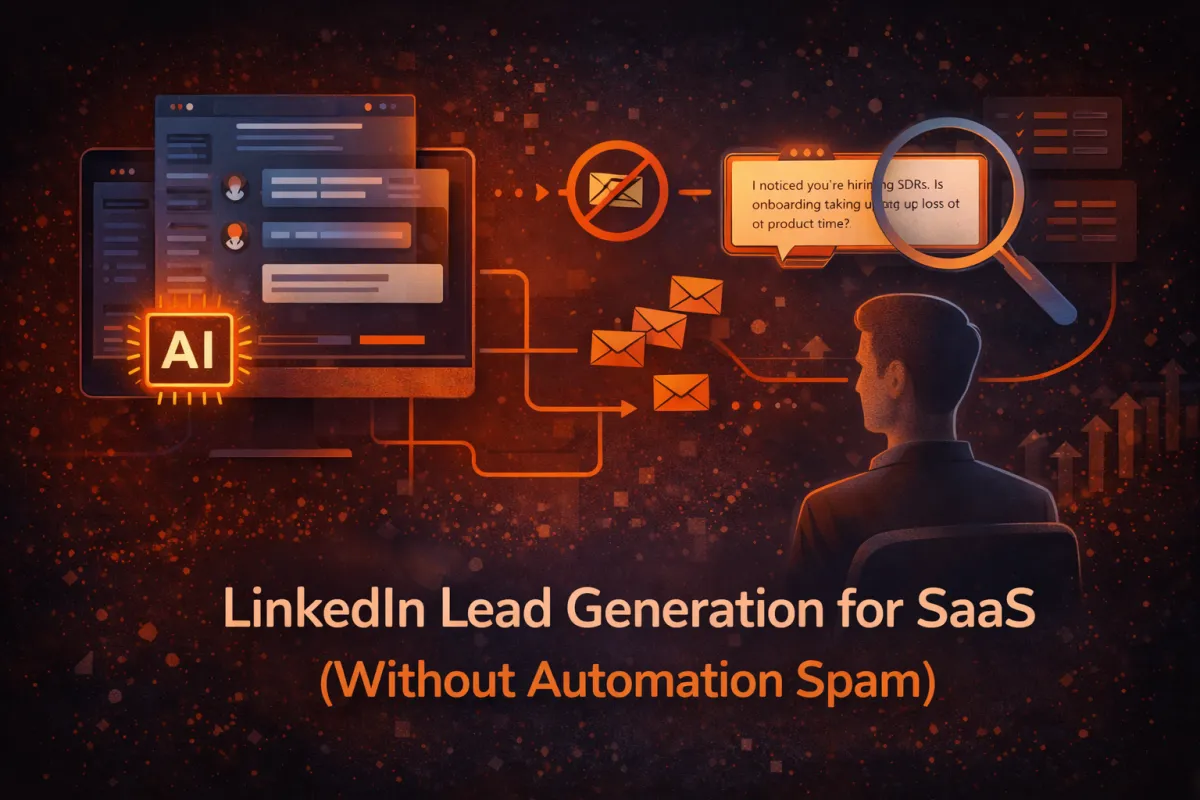
LinkedIn Lead Generation for SaaS (Without Automation Spam
LinkedIn Lead Generation for SaaS (Without Automation Spam)
If you’re building a SaaS business, LinkedIn can be one of the fastest ways to generate pipeline — but it’s also one of the quickest ways to burn trust.
A lot of “done-for-you” providers lean heavily on automation, high volume, and templated personalisation. Some agencies openly include automation software in their packages and push large-scale outreach as the core value.
The problem is simple: SaaS buyers aren’t stupid. When outreach feels automated, conversion drops and brand risk rises.
At Avantas, we take a different approach: human-led outbound, accelerated by AI, with oversight at every decision point. That model is increasingly recognised across modern workflows as human-in-the-loop — using AI for speed while humans own judgement and quality. This guide shows you a safer, higher-converting way to use LinkedIn for SaaS lead generation — without becoming “that inbox”.
Why LinkedIn automation often underperforms for SaaS
Automation-heavy outreach is tempting because it looks scalable: more connection requests, more follow-ups, more messages.
But SaaS sales isn’t about volume. It’s about fit + timing + trust.
Here’s what typically breaks:
1) It optimises for activity, not outcomes
High message volume can produce “replies” that don’t turn into pipeline. If you’re measuring success by replies instead of qualified conversations, you’ll think it’s working while revenue stays flat.
2) It creates brand risk
Even when messages are “personalised”, automation patterns are obvious to experienced buyers. You might book a few calls — but you also quietly damage reputation with the majority who don’t respond.
3) It removes judgement from the process
The most important decision points in outbound are human:
Is this ICP actually a fit?
Is this the right angle for this person?
Is the message worth sending?
Modern human-in-the-loop thinking exists for a reason: AI can accelerate execution, but humans need to be involved at critical points to prevent expensive mistakes.
The Avantas approach: Human-led outbound, AI-accelerated delivery
We use AI where it’s strongest:
fast research
pattern spotting
drafting variations
summarising pain points
improving clarity
And humans where it matters most:
ICP judgement
message strategy
compliance and risk
tone and nuance
call conversion
This is the same underlying principle behind human-in-the-loop marketing definitions: AI handles production/scale, humans provide strategy, quality control, and judgement.
A 7-step LinkedIn lead generation system for SaaS
Step 1: Start with a tight ICP, not a massive list
SaaS outbound fails when targeting is lazy. Your ICP should include:
company type (industry + business model)
size range
tool stack signals (where possible)
role + buying power
trigger events (hiring, funding, migrations, compliance changes)
AI can help generate segments quickly, but humans must decide what’s commercially sensible.
Step 2: Write a one-sentence “reason to care”
This is not your value prop. It’s the buyer’s internal thought:
“This might be relevant because…”
If you can’t write that sentence for each segment, you’re not ready to message them.
Step 3: Build a 3-message sequence that feels human
Forget 9-step cadences. Most SaaS buyers will ignore you after the second nudge.
A strong sequence looks like:
short connection note (no pitch)
relevance message (one insight + one question)
polite close (“no worries if not a priority”)
Step 4: Personalise for meaning, not decoration
“Loved your post” isn’t personalisation.
Meaningful personalisation includes:
a trigger (“noticed you’re hiring SDRs”)
a constraint (“seen teams struggle when X happens”)
an informed guess (“I’d bet your bottleneck is…”)
This is where AI helps: it can summarise public signals fast. Humans decide what’s respectful and accurate.
Step 5: Use a soft CTA that respects time
High-performing SaaS outreach rarely pushes “book a call” immediately.
Better CTAs:
“Worth a quick swap of notes?”
“If it’s useful, I can share a 3-bullet approach.”
“Want the playbook we use for this?”
Step 6: Track the right metrics
Most teams obsess over connection acceptance. It’s a weak signal.
Track:
positive reply rate
qualified reply rate
meetings held (not booked)
opportunities created
cycle time and win rate (later)
Step 7: Feed learnings back into messaging weekly
This is the real edge.
If your messaging doesn’t evolve every week based on:
objections
“not now” reasons
competitor mentions
feature misunderstandings
…your outreach becomes stale quickly.
Three copy examples you can steal
1) Connection request (no pitch)
Hi {Name} — quick one: I work with SaaS teams on pipeline and conversion.
Thought it’d be useful to connect, as we’re in similar circles.
2) First message (relevance + question)
Thanks for connecting, {Name}.
I noticed {signal}. Often when that happens, teams see {specific pain}.
Curious — is {pain} something you’re dealing with this quarter?
3) Polite close (keeps trust intact)
No worries if it’s not a priority right now.
If you ever want a quick sanity check on {topic}, happy to share what we’re seeing across SaaS.
Why this outranks “automation-first” competitors
Agencies like Cleverly heavily emphasise scale, automation, and done-for-you messaging backed by campaign data, and they package access to an outreach tool alongside services.
Your advantage isn’t trying to “out-automate” them.
Your advantage is being the grown-up alternative:
human-led judgement
safer execution
better quality conversations
less brand risk
more defensible pipeline
That’s what serious SaaS teams want as AI becomes more common: orchestration, oversight, and accountability — not just activity.
FAQs
Is LinkedIn automation worth it for SaaS?
It can work in the short term for lead volume, but it often comes with quality and brand trade-offs. Human-led outbound tends to produce fewer “empty replies” and more commercially useful conversations, because judgement is applied at the moments that matter.
How many messages should we send per day?
Start lower than you think. Most SaaS teams get better results by improving targeting and relevance rather than increasing volume.
What’s the fastest way to improve reply rates?
Tighten your ICP, personalise for meaning (trigger + constraint), and ask a single clear question that’s easy to answer.
A calm next step (CTA)
If you want this implemented properly, start with a Growth Audit. We’ll review your ICP, messaging, and outbound setup, then give you a focused 90-day plan designed to produce pipeline without burning trust.
